Pages

Showing posts with label TAMIL NADU. Show all posts

Friday, 11 January 2013

MANGULAM - TAMIL NADU


Mangulam is a small beautiful village.Its situated in Tamil Nadu. Mangulam, located at 25 Km from Madurai town.  This place is also called chinna mangulam. The placed is blessed with small mountains, ponds .... well known site for the presence of early Jain Caves and Rock beds .


There are many rocky hills... Climbing them and having a beautiful scenic view is so enthusiastic.
A view of sun set in Mangulam is so pleasing one.
Potteries of Black and Red ware shards  coarse red ware shards  pieces of quartz stones, small sling stones and a copper coin (date able to 13-14th Century CE) were collected from the trench laid near Meenakshipuram. Excavation on the terrace of Jain caves exposed the flooring of a rectangular chamber and brick wall, made of 11 courses of bricks. The size of the bricks is 35 x 18 x 6 cm and clay mortar has been used as binding material.

Excavation has also exposed a small structure in pedestal form which may be assigned to Sangam period. Present excavation has exposed the presence of two cultural periods viz Early and Medieval historic period.

Tuesday, 2 October 2012

VALPARAI - TAMIL NADU


Valparai is located above the 3,500 feet from the sea level on the Anamalai mountain rangeValparai does not mean only a single town. There are 40 hairpin bends on the way to Valparai from Azhiyar. While major portions of the land is owned by private tea companies, large forest areas continue to be out of bounds. It stands majestically with Green Spread Mountains and forest all around. It is a pollution free land. There are also many places of scenic beauty such as Karainshola, Anaikunthi shola, grass hills, water falls, groves, teak forests, estates, dams and reservoirs.

64-km drive from Pollachi to Valparai is itself an exotic experience. En route is the Indira Gandhi Wild Life Sanctuary where lion-tailed macaque, the Nilgiri and the common langur, Malabar giant squirrel, elephant, gaur, spotted deer, sambar, barking deer and wild boar reside. From Valparai you can visit the Aliyar, Sholaiyar and Nirar dams. Tunnels bored into the mountains and canals to harness the water from Parambikulam, Aliyar, Nirar, Sholaiyar Dam, and several tourist spots.

Chinnakallar
It is the second highest  rain fall area inIndia. Always found wet and misty. A greenish dense forest with tall majestic trees all along the road to Chinnakalar a pleasure to enjoy. There is a falls in Chinnakallar which sounds like a roaring lion. Situated  at a distance of 15kms from Valparai.


The other places of interest near valparai are:
  • Karamalai Annai Vellankanni Church
  • Balaji temple
  • Grass Hills

Situated  at a distance of 15 kms. from Valparai.  Grass hills is a picturesque  spot located in the Valparai hills range, at a height  of approx: 2400m msl, with cool climate getting cooler at night, a  part of  Anamalai Tiger Reserve. Right now all efforts are being undertaken by the government to preserve the flora and fauna of this location. Nilgiri Thar is native of this place apart from Elephants, Bison, Indian Gaur, Bear, Nilgiri Langurs etc.. and a wide variety of birds including Hornbills.

  • Sholayar dam

It is the second deepest dam of Asia. Situated  at a distance of 20 Kms., from Valparai.  An active tourist spot found always busy. A beautiful place to visit.

  • Nirar dam

This dam is built for multipurpose project such as irrigation, Hydro electricity production. Dam is situated in a wonderful location covered by a dense forest. There is a waterfalls near by the dam which resembles the Cascade. Situated  at a distance of 15kms from Valparai.
  • Chitti Vinayagar Temple
  • Aliyar Park

Aliyar park is a leisure place to enjoy the natural scenery  of Aliyar dam and chain mountains of western Ghats. Kids can have a pleasant time in the park.
  • Monkey Falls
  • Loams View point

This is a beautiful view point to view Aliar Dam & surrounding mountains of western Ghats. This is situated in 9 th hairpin bend.

  • Nallamudi Poonjolai
  • Top Slip

Top slip is a national park and a medicinal plant conservation area in the Anamalai hills. It is about 37 kms. from Pollachi (about 90 kms from Coimbatore). It is famous for its elephant camp at Kollikamuthi and its wildlife. There are bungalows available within the sanctuary. For thrill seekers, accommodation is also available in a tree house. It got its name during the British era, as lots of timber slipped down to the plains below.
  • Athirapilly Falls

It is near to the entrance of the Sholayar range is a place of great scenic beauty. Here, the water plunges from a height of nearly 80 feet before joining the Chalakudi river.  this picturesque spot is adjacent to dense green forest, and is a part of Chalakudi River, 50 Kms. from Valparai towards Chalakudi, Kerala.

Thursday, 23 August 2012

KANYAKUMARI - TAMILNADU


Kanyakumari  is a town in the state of Tamil Nadu in India. It was also referred to as Cape Comorin earlier. Located at the southernmost tip of India.
Kanyakumari, being the geographical end of the peninsular country, is famous for the meeting point of Indian Ocean with Arabian Sea and Bay of Bengal. This even helps in experiencing a spectacular view of sunrise and sunset.


Kanyakumari takes its name from the Hindu Goddess Kanyakumari. The Kanniyakumari amman temple is situated in the town of its, on the sea-shore, the very confluence of the three water-bodies – the Arabian Sea, the Bay of Bengal and the Indian Ocean.  Mythological stories depict that Goddess parvati under the disguise of Devi Kanniya did a penance in one of the rocks in this area to reach the hand of Lord Shiva. This place is also a popular pilgrimage. The tourists who visit this southern most tip of India would certainly enjoy the exuberant scenes of the sunsets, the sunrises especially on full moon days. The nature of the sand in the beaches of Kanyakumari is unique as it is multicolored.
           
 Amidst the sea there are two rocks known as ‘twin rocks’ both contributing to the rich Indian heritage with the monuments of swamy Vivekananda and Saint Thiruvalluvar.


The places of visit in kanyakumari are:-


  • Vivekanda rock
  • Thiruvalluvar rock
  • Pathmanabhapuram palace
  • Goddess Bhagavathi Temple
  • Kamarajar Mani Mantapa Monument
  • Kanyakumari Gandhi Memorial
  • Kanyakumari Temple
  • Our Lady of Ransom Church
  • Suchindram Temple
  • Tsunami Monument

Sunday, 29 July 2012

MADURAI MEENAKSHI TEMPLE - TAMIL NADU

Madurai meenakshi temple is a historic Hindu temple located in the south side of river Vaigai] in the temple city of Madurai, Tamil Nadu, India. It is dedicated to Parvatiwho is known as Meenakshi and her consort, Shiva, named here as Sundareswarar. Madurai is an old city. The temple complex consists of 14 gopurams.


            The original temple was built by kulashekara pandya, but the entire credit for making the temple as splendid as it is today goes to the Nayaks.  The gopuras has an height more than 50 m. Each gopuram is a multi-storeyed structure, covered with thousands of stone figures of animals, gods and demons painted in bright hues


            There is a golden lotus tank; this temple tank is an ancient tank where devotees take bath in the holy water. The area is the meeting place of Tamil sangam , the academy of poets.  There is an oonjal mandapam, every Friday the idols of meenakshi and sundareswara, are seated on the swing and by singing a hymn, swing made to move to and fro.


HALL OF THOUSAND PILLARS

The "Aayiram Kaal Mandapam" or Thousand Pillar Hall contains 985(instead of 1000) carved pillars. Each pillar in the hall is a carved monument of the Dravidian sculpture. The more prominent among the carved figures are those of Rati, Karthikeya, Ganesha.


There are lot more exciting halls and sculptures inside the temple. This is one of the oldest temple.


Saturday, 9 June 2012

MAHABALIPURAM- TAMIL NADU


Mahabalipuram, derived from 'Mamallapuram' is the prior and colloquial name of a town in Kancheepuram district in the Indian state of Tamil Nadu, now officially called Mamallapuram. It has an average elevation of 12 meters (39 feet). Mahabalipuram was a 7th century port city of the South Indian dynasty of the Pallavas around 60 km south from the city of Chennai in Tamil Nadu

            The monuments are mostly rock-cut and monolithic, and constitute the early stages of Dravidian architecture wherein Buddhist elements of design are prominently visible. They are constituted by cave temples, monolithic rathas (chariots), sculpted relief and structural temples. The pillars are of the Dravidian order. The sculptures are excellent examples of Pallava art.

SHORE TEMPLE
           
It is believed that there were seven magnificent temples what are known as the seven pagodas, built near the sea share. But the lonely survivor is the shore temples. It was originally constructed during the 7th century and later it was Narasimha Varman II, (Rajasimha) completed the skilled work in his rule. This is one of the oldest of the south Indian Temples which were structural temples constructed in the nature Dravidian style.  There are three temples of which two Shiva Temples face east and west respectively. The other one is the Vishnu Temple.

ARJUNA’S PENANCE

This rock bas-relief was built by king Narasimha I. This rock is shaped like that of a huge wale. The sculpture is carved at the back portion of the whale shaped stone. It measures 27 meters in length and 9 meters in height with a crack in the middle of the rock. Arjuna is the great hero of the great epic Mahabharata. On either sides of the rock one can fin d the God’s of the triple world, demi-gods, or gods of men, birds and beasts, the Nagas, the Nymphs all found mingling into the theme of Arjuna’s penance.

MANDAPAMS

  Apart from the Rathas there were other constructions too erected by the Pallava kings. They were masters in building sock-cut carves and Mandapams. There are 14 such important constructions in and around Mamallapuram. Mythological scenes are depicted on these architectures. The Mandapams are mainly located on the main hill.
1)KrishnaMandapam
2)MahishasuramardhiniMandapam 
3) Varaha Mandapam

PANCH RATHAS OR THE FIVE RATHAS

The five Rathas is a set of magnificent monolithic rock temples. Panch is a Hindi world which means ‘Five’. These fine rock temples are located in a sandy compound. These five Rathas are the perfect examples of the evolution of Dravidian style architecture. There are built in the shaper of pagodas and they look similar to that of the Buddhist shrines and monasteries. These chariots are constructed with Towers, The cars of gods, multi pillared halls, and sculptured walls which are chiseled out minutely.
      The Rathas have an association to the great epic Mahabharata which describes the heroes of Mahabharata with their wife Draupadi which is termed as pancha pandava rathas. The five rathas are (i) Draupadi’s Ratha, (ii) Arjuna’s Rath, (iii) Nakul – Sahadev’s Rath, (iv) Bhima Rath and (v) Dharamraja Yudhistar’s Rath.

OTHER ARCHITECTURES

          These ordinary rocks in Mamallapuram lane been transformed by the Pallavas into beautiful sculptures and monuments which are beauty to a place. This shows the skills of the Pallava craftsmen. The other marvels in and around Mamallapuram are Trimurti cave, Kodikkal Mandapam, Replica of Arjuna’s Penance, Ramanuja Mandapam, Adivaraha Temple, Krishna’s Butter Ball, Koneri cane, Pancha Pandava Mandapam and Sthalasayana Perumal temple.

PLACES AROUND MAHABALIPURAM

      There are many places around Mahabalipuram to be visited. They are cholamandal artist’s village, Dakshina Chitra, Muthukadu, Crocodile and Snake Bark, Chengalpattu, Kanchipuram, Various Temples, Kovalam, Mudaliarkuppam, Thirukkalukundram, Tirupporur, Vandalur and Vedanthangal.

Wednesday, 6 June 2012

DHANUSHKODI - TAMIL NADU


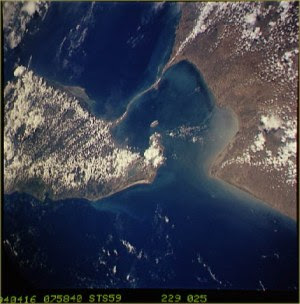
Dhanushkodi or Danushkodi is a town/village at the southern tip of the Rameswaram island, at the eastern coast of theTamil Nadu state of India. Its also known as ghosts town.
Dhanushkodi is situated in the South-East of Pamban. Danushkodi is about 18 miles (29 km) West of Talaimannar in Sri Lanka. The Dhanushkodi railway line running from Pamban Station was destroyed in the 1964 cyclone and a passenger train with over 100 passengers drowned in the sea.  Eyewitness accounts recollected of how the surging waters stopped just short of the main temple at Rameshwaram where hundreds of people had taken refuge from the fury of the storm. Following this disaster, the Government of Madras declared the town as Ghost town and unfit for living after the storm.Only few fisherfolks now live there.
            Hindu scriptures says that at the request of Vibeeshana, brother of Ravan and ally of Ram, Rama broke the Sethu with one end of his bow and hence the name Dhanushkodi, Dhanush meaning Bow and Kodi meaning end. It is also said that Rama marked this spot for Setu with one end of his famous bow. Bath in holy Sethu at the junction of the two seas normally precedes the pilgrimage to Rameswaram. A series of rocks and islets found in a line are shown as remnants of the ancient Setu also called as Rama's Bridge.
            Dhanushkodi has the only land border between India and Sri Lanka which is one of the smallest in the world-just 50 yards in length on a shoal in Palk Strait. Before the 1964 cyclone, Dhanushkodi was a flourishing tourist and pilgrimage town. Since Ceylon (now Sri Lanka) is just 19 miles (31 km) away, there were many ferry services between Dhanushkodi and Talaimannar of Ceylon, transporting travellers and goods across the sea. There were hotels, textile shops and dharmashalas catering to these pilgrims and travellers. The Railway line to Dhanushkodi–which did not touch Rameshwaram then and destroyed in the 1964 cyclone-went directly from Mandapam to Dhanushkodi. Dhanushkodi in those days had a railway station, a small railway hospital, a higher secondary school, a post office, customs and port offices etc
             Haunting yet appealing, deserted but still full of life, eerie but fascinating — Dhanushkodi is full of contradictions. Bow's End (as translated from Tamil) is a sure delight if you have a penchant for impossibly blue seas, pristine white sands and ruins by the shore. Bordered by the Bay of Bengal and the Indian Ocean, this semi-ghost town is probably one of the most spectacular stretches in Tamil Nadu.
Breathtaking beauty, a population of less than 500, the nearest telephone about 20 km away, out of reach of mobile signals and the feeling of being in a place which was once alive, now reduced to rubble, makes it a place truly less travelled.
There  is another roofless shattered building resembling a church. Inside, a pedestal, which could have been the altar, stands intact. the village post office — now a grand red arch, the rest of it buried in sand. A ruined railway station and a temple lie among the debris. But the shells of the structures sit peacefully in dunes of white sand against a deceivingly calm and sparkling blue sea.
Old church

pic of thedisaster


old railway station

a railway brigde that can be folded


There are a lot of temples on way to danushkodi. On reaching danushkodi to view the bridge made by Rama we have to hire a truck that can travel through the sand dunes. The ride through the sand dunes is to memorable, the blue ocean and the cold wind in the wild deserted area is so memorable. 
 

Blogger news

Blogroll

About